EULAR 2020: meer dan 50 nieuwe bevindingen die de behandeling van uw reumatische aandoening kunnen veranderen
(dit is een nederlandstalige versie van het originele engelstalige bericht opdeze pagina van
CreakyJoints.org gemaakt met behulp van vertaalmachine DeepL en handmatige nabewerking. CreakyJoints is een digitale gemeenschap voor miljoenen reumapatiënten en zorgverleners wereldwijd die op zoek zijn naar onderwijs, ondersteuning, belangenbehartiging en patiëntgericht onderzoek. Alle programma’s en diensten van CreakyJoints worden altijd gratis aangeboden.)
Op de ditmaal via internet virtuele medische bijeenkomst in 2020 van de European League Against Rheumatism (Europese Liga tegen Reuma, kortweg EULAR) werden weer belangrijke medische doorbraken en updates over hoe het best om te gaan met reumatische aandoeningen gedeeld.
Onder normale omstandigheden bestaan internationale medische conferenties zoals die van EULAR, de European League Against Rheumatism, uit enkele lange dagen vol met persoonlijke ontmoetingen, het volgen van lezingen en urenlange rondzwervingen langs posterpresentaties en expositiezalen vol met updates op het gebied van reumatologisch onderzoek. Het doel: reumatologen en andere zorgverleners voorzien van de nieuwste wetenschappelijke ontwikkelingen en klinische richtlijnen geven voor de behandeling van reumatische en anderzins bewegingsapparaat gerelateerde aandoeningen.
Vanwege de COVID-19 pandemie werd de EULAR-bijeenkomst in 2020 snel omgezet naar een virtuele bijeenkomst, en hernoemd tot het EULAR 2020 E-Congres. Deelnemers konden live en maar ook eventueel achteraf opgenomen virtuele sessies bijwonen en online lezen over onderzoeksupdates (abstracts en posters). Natuurlijk heeft het bijwonen van een medische bijeenkomst online voors en tegens in vergelijking met het fysiek bijwonen in persoon, maar het belangrijkste is dat – al dan niet virtueel – onderzoeksnieuws wordt gedeeld met de wereldwijde reumatologie patiënten gemeenschap.
Onderzoek van grote medische conferenties kan direct van invloed zijn op de manier waarop in de dagelijkse praktijk u en uw zorgverlener samen uw aandoeningen behandelen. We hopen dat deze updates u helpen om uw zorgverlener vragen te stellen, uw begrip van uw reumatische aandoeningen te verbeteren en uiteindelijk uw zorg te verbeteren, zodat u met minder pijn, vermoeidheid en verstoring van uw dagelijks leven kunt leven.
Ons CreakyJoints team heeft honderden onderzoeken doorgelezen, samenvattingen en berichten van het congers zoals gepubliceerd op websites van zorgverleners in ogenschouw genomen en onze medische adviseurs gevraagd naar hun mening over het meest impactvolle onderzoek voor patiënten. Hieronder vindt u een bloemlezing van wat u volgens ons CreakyJoints team moet weten van het EULAR 2020 E-Congres.
Hieronder een inhoudsopgave van dit naslag document:
- COVID-19
- Reumatoide Artritis
- Methotrexaat
- Artritis Psoariatica
- Axiale Spondyloartritis
- Jicht
- Lupus
- Osteoartritis (artrose)
- Fibromyalgie
- Mentale gezondheid, Welbevinden en meer
COVID-19

De grootste studie tot nu toe van reumapatiënten met COVID-19 laat een aantal verrassende zaken zien over welke patiënten wel en welke niet in gevaar zijn. In een studie die in de aanloop naar EULAR werd gepubliceerd – en die uitgebreid werd besproken tijdens de conferentie – werden 600 casestudies geanalyseerd in de COVID-19 Global Rheumatology Alliance die tussen 24 maart en 20 april 2020 naar dit register werden gestuurd door artsen uit 40 landen. Onderzoekers bemerkten onder andere dat leeftijd een grote impact had op de kans op ziekenhuisopname, en patiënten met bepaalde reumatische aandoeningen meer kans maakten op ziekenhuisopname dan anderen, bijkomende ziekten en aandoeningen (comorbiditeit) de kans op ziekenhuisopname verhoogden, en waar het gebruik van glucocorticoïden (zoals prednison) gerelateerd leken aan ziekenhuisopname, waren andere reumamedicijnen dat niet. Omgekeerd liet recent onderzoek uit het Verenigd Konikrijk overigens zien dat een hoge dosis glucocorticosteroïden juist de kans op overleving kan vergroten bij ernstige ziekteverschijnselen van COVID-19. Lees op de website van CreakyJoints (engelstalig) hier meer over de bevindingen.
Reumatoide Artritis (RA)
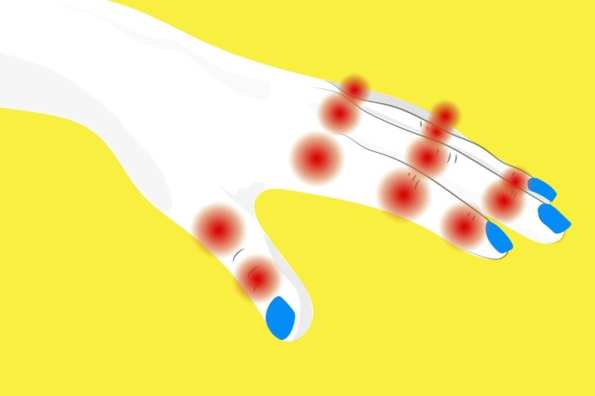
Remissiecijfers (d.w.z. datde ziekteactiviteit geheel tot rust werd gebracht) waren met name hoog indien Reumatoide Artritis zeer vroeg werd behandeld – ongeacht de behandelingsschema’s. In een gerandomiseerde studie van patiënten met zeer vroege Reumatoide Artritis (RA) in Zweden, Noorwegen, Finland, Nederland, Denemarken en IJsland proberen onderzoekers de effectiviteit van verschillende behandelingen in zeer vroege stadia van de ziekte te begrijpen. Ze hebben de patiënten gerandomiseerd naar vier verschillende behandelingsgroepen en hen gedurende zes maanden gevolgd: conventionele therapie (methotrexaat met afbouwschema prednison of methotrexaat met sulfasalazine, hydroxychloroquine en intra-articulaire glucocorticoïde-injecties in gezwollen gewrichten) of één van de drie verschillende biologische geneesmiddelen: abatacept (Orencia); certolizumab pegol (Cimzia); of tocilizumab (RoActemra). Na de eerste maand kregen patiënten in alle groepen wekelijks ook methotrexaat.
De onderzoekers vonden dat hoge remissiecijfers (ruwweg 40 tot 50 procent) werden waargenomen bij eigenlijk alle behandelingsschema’s, waarbij abatacept net het beste presteerde: 52 procent van deze patiënten was “in remissie” (geen ziekteactiviteit van de reuma) binnen zes maanden.
“Deze gegevens suggereren dus dat conventionele standaard therapie een vergelijkbare werkzaamheid heeft als bepaalde biologische geneesmiddelen (biologicals) bij de behandeling van vroege Reumatoide Artritis,” meldde Rheumatology Advisor. “Hoge remissiecijfers werden waargenomen in alle studie-armen, hoewel abatacept in combinatie met methotrexaat geassocieerd werd met de grootste symptoomverbetering.”
Als het gaat om het zien van een reumatoloog voor RA-symptomen geldt: hoe eerder hoe beter. Een team van Nederlandse en Franse onderzoekers bekeek twee databases met reumapatiënten om te zien of het zien van een reumatoloog eerder na het begin van de symptomen tot betere resultaten leidde in de loop van de tijd. “Zij vonden dat patiënten die een reumatoloog binnen zes weken zagen meer kans hadden om uiteindelijk in remissie te zijn zonder sterke RA-medicatie dan die gezien in zeven tot 12 weken of na meer dan 12 weken,” zegt Theodore R. Fields, MD, een reumatoloog in het Ziekenhuis voor Speciale Chirurgie in New York City. “Dit pleit voor eerdere verwijzing van patiënten met RA naar een reumatoloog.”
Zouden RA-patiënten in remissie op een biological moeten beginnen met het afbouwen van de dosering? Waarschijnlijk niet, volgens een studie die 84 RA-patiënten die een jaar in stabiele remissie TNF-remmers onderverdeelde in een groep die daarmee doorging en een groep die ging afbouwen over een epriode van vier maanden.
“De groep die de TNF-remmers afbowude, had een kans op opvlammen (een flare) van de reuma van 63 procent en degenen die op de TNF-remmers bleven zitten, hadden slechts een kans op opvlammen van 5 procent,” zegt Dr. Fields. Gelukkig deden de patiënten waarvan de reuma opvlamde het weer goed zodra de TNF-remmers opnieuw werden opgestart. “Deze studie roept vragen op over het al dan niet afbouwen van een TNF-remmer met het oog op het hoge opvlam percentage. Aangezien patiënten het echter goed deden na het herstarten van de TNF-remmer, is langzaam afbouwen en eventueel zelfs stoppen voor sommige patiënten nog steeds een optie zonder dat hun reuma opvlamt (en het leidt ook tot een aanzienlijke kostenbesparing in het geval afbouw wel sucecsvol verloopt)”.
Vinicius Domingues, MD, een reumatoloog in Daytona Beach, Florida, voegt toe: “Deze resultaten tonen aan dat voorzichtigheid geboden blijft alvorens TNF-remmers bij patiënten met RA te verminderen of te stoppen, ongeacht de toestand van de remissie”.
Een in ontwikkeling zijnde nieuwe JAK-remmer, filgotinib, deed het goed in een aantal studies.
Als onderdeel van een groeiende klasse van zogenaamde JAK-remmers – orale pillen die gericht zijn op specifieke immuunsysteemtrajecten voor de behandeling van ontstekingsziekten – zoekt filgotinib dit jaar de goedkeuring van de FDA. In een studie werden de patiënten gerandomiseerd naar één van de vier groepen: 200 mg filgotinib met methotrexaat; 100 mg filgotinib met methotrexaat; een placebo met methotrexaat; of de biological adalimumab (Humira) met methotrexaat.
Volgens MedPage Today, “bereikten meer patiënten die één van de twee doses filgotinib (100 mg en 200 mg) kregen, de American College of Rheumatology Criteria van ten minste 20 procent verbetering in het aantal gevoelige en gezwollen gewrichten in week 12 ten opzichte van placebo” en “een groter deel van de patiënten die met 200 mg filgotinib werden behandeld, bereikte bij week 52 een lage ziekteactiviteit … in vergelijking met de met adalimumab behandelde patiënten”.
In een afzonderlijke maar gerelateerde studie van RA-patiënten die nooit methotrexaat (MTX) of een biologische stof hadden ingenomen, werden de patiënten gerandomiseerd in groepen die 200 mg filgotinib met methotrexaat bevatten; 100 mg filgotinib met methotrexaat, 200 mg filgotinib alleen, of methotrexaat alleen. Volgens RheumNow.com deden patiënten op MTX alleen na een jaar slechter dan de andere drie groepen.
Wanneer een RA-patiënt het niet goed doet op de eerste biological (of zelfs na meerdere biologicals), welke behandeling dan te verkiezen? Dit is een situatie waar artsen en patiënten eigenlijk continu mee te maken hebben, dus geen wonder dat reumatoloog Jack Cush, MD, een reumatoloog van het UT Southwestern Medical Center en redacteur van RheumNow.com, deze studie “de beste studie van EULAR 2020” noemde in een video over de bevindingen. Onderzoekers namen een groep van 612 patiënten die geen goede reactie hadden op eerdere biologiical therapie en randomiseerden hen naar ofwel de nieuwe JAK-remmer upadacitinib (Rinvoq), hetgeen een dagelijks ingenomen orale pil is, ofwel een infuus met abatacept (Orencia). Alle patiënten zetten hun achtergrond conventionele ziekteveranderende medicijnen (DMARDs), zoals methotrexaat, voort.
Onderzoekers vonden dat upadacitinib effectiever was in het helpen van patiënten om een lage ziekteactiviteit te bereiken, maar er waren minder bijwerkingen bij abatacept.
Welke behandeling je moet kiezen “hangt dus af van wat je wilt”, legde Dr. Cush uit. Als je je vooral het snel onder controle krijgen van de symptomen ten doel stelt, “zou je kunnen worden beïnvloed door de gegevens over de effectiviteit van upadacitinib, maar als je meer bezorgd bent over de eventuele bijwerkingen, zou je abatacept kunnen overwegen”.
Reumapatiënten die TNF-remmers gebruiken, hebben minder kans op gevaarlijke bloedstolsels. Iedereen kan een gevaarlijke bloedstolsel ontwikkelen, maar mensen met reumatoïde artritis (RA) lopen een hoger risico dan de meeste anderen. Hoewel alleen het hebben van RA het risico op bloedstolsels kan verhogen, hebben studies ook gesuggereerd dat RA-patiënten met een actieve ziekte veel meer geneigd zijn om bloedstolsels te ervaren in vergelijking met degenen wiens ziekte in remissie is. Dat betekent dat een effectieve behandeling die uw RA-ontsteking onder controle houdt, uw risico op deze mogelijk ernstige complicatie kan helpen verminderen.
Volgens een nieuwe studie van Duitse onderzoekers hebben RA-patiënten die TNF-remmers gebruiken aanzienlijk minder kans dan degenen die conventionele ziekteveranderende medicijnen (DMARD’s) gebruiken om een gevaarlijk bloedstolsel te ontwikkelen.
Lees op de website van CreakyJoints (engelstalig) hier meer over de bevindingen.
Bepaalde factoren spelen een rol bij een verhoogd risico op interstitiële longziekte bij reumatoïde artritis. Een aanzienlijk deel van de RA-patiënten ontwikkelt uiteindelijk een interstitiële longziekte (ILD), een aandoening die meestal optreedt wanneer een chronische ontsteking het weefsel tussen de kleine luchtzakjes (alveloli) in de longen doet verlittekenen en verstijven. Toen de onderzoekers probeerden te bestuderen welke RA-patiënten meer kans hebben om ILD te ontwikkelen dan anderen, vonden zij dat bij de reumapatiënten met ILD vaker een beduidend hogere ziekteactiviteitsscore, aanwezigheid van reumatoïde factor en anti-cyclische geciteerde peptide antilichamen (anti-CCP), chronische obstructieve longziekte (COPD), erosieve gewrichtsschade en reumanoduli gevonden werden in vergelijk met hen die geen ILD hadden ontwikkeld.
Lees op de website van CreakyJoints (engelstalig) hier meer over de bevindingen.
Yoga verbeterde de stemming en de vermoeidheid aanzienlijk onder RA patiënten in een gerandomiseerde studie. Om met RA om te gaan is vaak meer nodig dan alleen het gebruik van reumamedicijnen; ook speelt het maken van leefstijlveranderingen die kunnen helpen bij het aanpakken van zaken als stemming, vermoeidheid en andere moeilijke aspecten van het leven met RA een rol. In deze studie werden 35 patiënten (gemiddelde leeftijd 55 jaar en gemiddelde ziekteduur vijf jaar) gerandomiseerd naar een yogaprogramma van 12 weken of naar reuma-gerelateerde educatieve lezingen. Onderzoekers vonden significante verbeteringen in vermoeidheid, angst en depressie in de yogagroep in vergelijking met de controlegroep, hoewel er geen veranderingen waren in de ziekteactiviteit tussen de groepen. “Ondanks de beperkingen (kleine studiegroep) suggereren onze bevindingen dat yoga nuttig kan zijn als onderdeel van de behandeling bij RA-patiënten”, concludeerden de onderzoekers.
Methotrexaat (MTX)

Misselijkheid en vermoeidheid na een methotrexaatdosis komt vaak voor en heeft te maken met de timing van de dosering. Misselijkheid en vermoeidheid zijn algemeen gerapporteerde bijwerkingen voor dit medicijn, dat veel gebruikt wordt voor de behandeling van reumatische artritis, psoriatische artritis en andere reumatische aandoeningen. Maar hoe verhouden deze bijwerkingen zich tot de timing van de dosis, die meestal één keer per week wordt genomen? Toen onderzoekers van de Global Health Living Foundation (GHLF) en CreakyJoints gegevens van 91 patiënten bekeken die ofwel reumatoïde artritis of psoriatische artritis hadden en momenteel orale methotrexaat namen, vonden ze dat er een toename in misselijkheid en vermoeidheidssymptomen was na de MTX-dosis die vervolgens in de loop van de tijd voor de volgende dosis afnam. Bij deze patiënten had 40 procent een opmerkelijke verandering in misselijkheidsverschijnselen na inname van MTX en bijna 61 procent had een opmerkelijke verandering in vermoeidheidsverschijnselen na inname van MTX. Lees op de website van CreakyJoints (engelstalig) hier meer over de bevindingen.
Met toevoegen van cafeïne aan uw methotrexaatregime kan het mogelijk beter verdragen worden. In een Egyptische studie van 60 reumapatiënten die gematigde tot ernstige, ondraaglijke bijwerkingen op methotrexaat gebruik hadden ondervonden, werd de helft gerandomiseerd om een extra dosis cafeïne te krijgen via pure chocolade of koffie. De andere helft nam hun medicatie zoals voorgeschreven zonder extra cafeïne. Na drie maanden meldde 80 procent van de patiënten die de extra cafeïne innamen een afname in hun MTX-gerelateerde bijwerkingen. De helft van de ontvangers van cafeïne was in staat om te stoppen met het innemen van anti-misselijkheidsmedicijnen, terwijl niemand in de controlegroep dat kon.
Het niet innemen van methotrexaat zoals voorgeschreven heeft een direct effect op de behandelingsresultaten. Het “falen” van methotrexaat leidt er vaak toe dat mensen met reumatische aandoeningen de behandeling laten escaleren naar biologicals of andere gerichte therapieën, maar soms werkt methotrexaat niet zo goed als het zou kunnen, omdat patiënten het niet innemen zoals voorgeschreven. Mexicaanse onderzoekers probeerden dit te bestuderen in een groep van 795 RA-patiënten; 75 procent van de patiënten had een orale MTX therapie (tabletten) en de rest een injecteerbare versie. Er werd een significante correlatie gevonden tussen de activiteit van de RA-ziekte en in hoeverre de MTX trouw ingenomen of toegediend werd (de therapie compliantie). (Met andere woorden, mensen die hun MTX niet zoals voorgeschreven innamen, hadden een slechtere ziekteactiviteit).
“Voordat de behandeling van een patiënt die met methotrexaat wordt behandeld als falend wordt beschouwd, moet de therapietrouw worden geëvalueerd”, concludeerden de onderzoekers. “Volgens onze resultaten lijkt zelfrapportage hier een kosten- en tijdsefficiënte methode.”
Methotrexaat verhoogt het risico op interstitiële longziekte bij RA niet. Hoewel longaandoeningen als een zeldzame maar potentiële bijwerking van methotrexaat worden beschouwd, wordt dit betwist en is er meer onderzoek nodig om dit beter te begrijpen.
Toen een team van internationale onderzoekers het verband onderzocht tussen MTX-blootstelling en interstitiële longziekte (ILD) bij 482 patiënten met RA-ILD en 741 patiënten met RA zonder ILD, stelden ze vast dat methotrexaat niet alleen het risico op ILD niet verhoogde, maar dat het eigenlijk in verband werd gebracht met een verminderd risico op ILD. Het methotrexaat gebruik vertraagde ook het ontstaan van ILD.
Artritis Psoriatica

Secukinumab (Cosentyx) deed het goed voor psoriatische artritis huid en gewrichten in vergelijking met adalimumab (Humira). In een “head-to-head” klinische studie heeft Cosentyx, een biologisch product dat een eiwit van het immuunsysteem, interleukine-17 (IL-17) genaamd, remt, de huid beter rustig gekregen dan Humira, een biologisch product dat de ontstekingsmolecule tumor necrose factor (TNF) remt – en het deed het even zo goed bij de behandeling van gewrichtssymptomen.
Reumatologen die commentaar geven op het onderzoek vermoeden dat studies als deze kunnen beginnen te veranderen welke biologische psoriatische artritispatiënten krijgen nadat ze verder gaan met de eerstelijnsbehandeling. “Zeker het lijkt [IL-17 drugs] zijn beter voor de huid en nu hebben we onderzoek dat laat zien dat ze zijn zeer goed voor de musculoskeletale domeinen,” reumatoloog Arthur Kavanaugh, MD, professor in de geneeskunde aan de Universiteit van Californië, San Diego, zei in een RheumNow podcast. Lees op de website van CreakyJoints (engelstalig) hier meer over de bevindingen.
De nieuwe JAK-remmer upadacitinib (Rinvoq) is veelbelovend voor psoriatische artritis. De JAK-remmer upadacitinib (Rinvoq) werd in 2019 een behandelingsoptie voor mensen met reumatoïde artritis (RA) die niet goed hadden gereageerd op methotrexaat. Nu geven veelbelovende resultaten van twee studies aan dat het ook nuttig kan zijn bij de behandeling van zowel gewrichts- als huidsymptomen bij patiënten met artritis psoriatica. Lees op de website van CreakyJoints (engelstalig) hier meer over de bevindingen.
Guselkumab (Tremfya) verbeterde gewrichts- en huidklachten bij artritis psoriatica. Als onderdeel van een trend van de toenameende behandelopties voor artritis psoriatica, deed guselkumab, dat werkt op het immuunsysteem molecuul interleukine-23 (IL-23), het goed in twee fase III studies..
Het medicijn is al goedgekeurd voor de behandeling van psoriasis en zal waarschijnlijk deze zomer door de Amerikaanse Food and Drug Administration (FDA) worden goedgekeurd. “De eerste resultaten van de studies toonden aan dat de behandeling met guselkumab 100 mg om de vier of acht weken de gewrichts- en huidsymptomen in de loop van zes maanden aanzienlijk verbeterde”, zegt Dr. Domingues. “Hierna werden placebo-behandelde patiënten in beide onderzoeken overgeschakeld op de hogere dosis guselkumab, waardoor zeer goede resultaten werden bereikt.”
Patiënten met artritis psoriatica die slecht reageerden op methotrexaat deden het beter als ze adalimumab (Humira) toevoegden in plaats van alleen maar de dosis MTX te verhogen. Dit is een veelvoorkomend dilemma waar patiënten en hun artsen mee te maken hebben: Wanneer de dosis van een huidig medicijn verhogen en wanneer kiezen voor het toevoegen van een nieuw medicijn? In een studie bij artritis psoriatica die nog nooit eerder waren behandeld met een biological (biological-naïef) en een matige tot hoge ziekteactiviteit hadden ondanks het feit dat ze minstens vier weken lang 15 mg methotrexaat per week innamen, werd de helft gerandomiseerd om de TNF biological adalimumab (Humira) toe te voegen aan hun huidige MTX-dosis. De andere helft verhoogde hun dosis MTX. Ze werden gedurende 16 weken gevolgd. Onderzoekers vonden dat “een significant hoger percentage van de patiënten een minimale ziekteactiviteit bereikte in week 16 na de introductie van adalimumab in vergelijking met ophogen van de dosis van methotrexaat. Patiënten die adalimumab begonnen te gebruiken, hadden ook significant hogere responsen op het gebied van het bewegingsapparaat, de huid en de kwaliteit van leven.”
Vermoeidheid is een groot probleem bij artritis psoriatica, zelfs bij patiënten met remissie of lage ziekteactiviteit. Een Duitse studie bevestigde wat veel psoriatische patiënten maar al te goed weten: dat vermoeidheid heel vaak voorkomt en een aanzienlijke invloed heeft op de kwaliteit van leven. Van de 105 patiënten die een groot aantal onderzoeken, een klinisch onderzoek en laboratoriumtests hebben uitgevoerd, werd 53 procent als vermoeid bestempeld en werd nog eens 21 procent als ernstig vermoeid beschouwd.
Het meest problematisch was echter dat de vermoeidheidsgraad hoog was, zelfs bij patiënten die als in remissie werden beschouwd. Zestig procent van de onderzochte patiënten werd op basis van hun ziekteactiviteitsscore als in remissie beschouwd, maar 38 procent van hen meldde een hoge mate van vermoeidheid. “Het lijkt erop dat de klinische routinematige beoordelingen van de ziekteactiviteit, met inbegrip van laboratoriumtests en [doktersbeoordelingen] vermoeidheid in artritis psoriatica niet voldoende identificeren”, concludeerden de onderzoekers. “Daarom zou een gestandaardiseerde verwerving van vermoeidheid deel moeten uitmaken van studies en dagelijkse routinezorg voor patiënten met artritis psoriatica”.
Biologicals kunnen ontwikkelen van artritis ‘voorkomen’ bij psoriasispatiënten. Een opkomend thema in artritis psoriatica onderzoek is de vraag of deze aandoening voorkomen kan worden door het behandelen van ziekteactiviteit bij mensen met psoriasis. Argentijnse onderzoekers hebben meer bewijs om aan te tonen dat dit het geval kan zijn. Ze keken naar bijna 800 patiënten met psoriasis maar geen artritis psoriatica, documenteerden hun behandeling [of ze nu lokale huidmiddelen, lichttherapie, conventionele ziekteveranderende medicijnen (DMARDs) zoals methotrexaat, of biologische DMARDs gebruikten], en volgden hen om te zien of ze al dan niet artritis psoriatica ontwikkelden in de loop van de tijd. Ze ontdekten dat patiënten met biologicals een verminderd risico hadden op het ontwikkelen van artritis psoriatica in vergelijking met andere soorten behandelingen bij psoriasis.
Jeuk aan de huid is een problematisch symptoom bij artritis psoriatica. Om beter te begrijpen hoe jeukende huid – een kenmerkend symptoom van psoriasis – de levenskwaliteit van patiënten met artritis psoriatica beïnvloedt, onderzochten Noorse en Amerikaanse onderzoekers 125 mensen met artritis psoriatica. Ze vonden dat 57 procent zei dat ze “een beetje” jeuk hadden, 18 procent meldde “veel” jeuk, en 5 procent zei dat jeuk een groot probleem was. Na meer analyses vonden de onderzoekers dat de jeuk niet geassocieerd werd met de mate van betrokkenheid van de huid. Met andere woorden, je zou een mindere hoeveelheid huid met actieve psoriasis plekken kunnen hebben bij artritis psoriatica, maar toch het gevoel hebben dat jeuk een grote impact heeft op je levenskwaliteit.
Axiale Spondyloartritis (axSpA)

Weinig niet-radiografische axiale spondyloartritis (nr-axSpA) patiënten eindigen met wervelkolomtschade gedurende twee jaar follow-up. De studie, die werd geleid door onderzoekers uit Zwitserland, had tot doel na te gaan of mensen met nr-axSpA evenveel kans hadden als mensen met radiografische axSpA om schade aan de wervelkolom zelf op te lopen.
(Zowel radiografische als niet-radiografische axiale spondyloartritis veroorzaken vergelijkbare symptomen en ziektelast. Het verschil is dat in radiografische gevallen schade aan de sacroiliacale gewrichten te zien is op röntgenfoto’s).
Het blijkt dat dit niet het geval is: Bijna niemand die nr-axSpA had bij de basislijn ontwikkelde ruggengraatschade binnen twee jaar. Lees op de website van CreakyJoints (engelstalig) hier meer over de bevindingen.
Centrale sensibilisatie komt vaak voor bij axiale spondyloartritis – en dit zou kunnen verklaren waarom tot 40 procent van de patiënten die biologicals gebruiken nog steeds hoge niveaus van pijn melden. Onderzoekers uit Nederland lieten mensen met axSpA drie verschillende vragenlijsten invullen om de pijnniveaus te beoordelen en deze te vergelijken met objectieve metingen van de ziekteactiviteit.
Ze vonden dat, hoewel de gemiddelde ziekteactiviteitsscores van patiënten aangaven dat ze geen hoge ziekteactiviteit hadden, de aanwezigheid van centrale sensibilisatie zeer vaak voorkwam en dat er meer aandacht aan besteed zou moeten worden wanneer een zorgverlener bepaalt hoe de patiënt met deze aandoening het beste behandeld kan worden. “Pijnwaarneming is zo belangrijk voor de resultaten,” zegt reumatoloog Alexis Ogdie, MD, directeur van de Penn Psoriatic Arthritis Clinic in Philadelphia, Pennsylvania. Lees hier meer over de bevindingen. Lees op de website van CreakyJoints (engelstalig) hier meer over de bevindingen.
Secukinumab (Cosentyx) verbeterde symptomen in niet-radiografische axiale spondyloartritis (nr-axSpA). De biologische, die het ontstekingseiwit interleukin-17 (IL-17) remt, werd net FDA-goedgekeurd voor deze aandoening. Niet-radiografische axiale spondyloartritis, waarvan wordt aangenomen dat het deel uitmaakt van hetzelfde ziektespectrum als radiografische axSpA, begint meer goedkeuringen te krijgen. (Een andere IL-17 remmer, ixekizumab, was ook recent FDA-goedgekeurd voor nr-axSpA).
In deze studie, die secukinumab vergeleek met een placebo, ondervond 42 procent van de patiënten op secukinumab een verbetering van 40 procent in de ziekteactiviteit na 16 weken, vergeleken met 29 procent van de patiënten die de placebo innamen (kritische noot: dat is een behoorlijk hoge respons op placebo, MZ). Na een jaar was tussen 35 en 40 procent van de secukinumab-patiënten in staat om de verbetering van de ziekteactiviteit te handhaven, vergeleken met slechts 20 procent van de patiënten die de placebo innamen. Lees meer over de bevindingen van MedPage Today.
Een nieuwe IL-17-remmer, bimekizumab, verbeterde de resultaten bij ankyloserende spondylitis. In een fase II-studie bij 303 volwassenen met actieve ankyloserende spondylitis, onder leiding van Désirée van der Heijde, MD, PhD, van het Leids Universitair Medisch Centrum in Nederland, werden mensen gerandomiseerd om verschillende doses bimekizumab of een placebo te krijgen en werden ze 48 weken lang gevolgd.
“”De resultaten toonden grotere verbeteringen op week 12 in rugpijn, vermoeidheid, ochtendstijfheid, slaap, ziekteactiviteit en levenskwaliteit bij met bimekizumab behandelde patiënten dan bij patiënten die placebo kregen”, legt Dr. Domingues uit. “De reacties werden verder verbeterd en gehandhaafd tot week 48.” Het geneesmiddel is nog niet goedgekeurd of beschikbaar in de VS Lees meer over de bevindingen van Healio Rheumatology.
Medicatievrije remissie komt niet vaak voor bij axiale spondyloartritis. In het biologische tijdperk van de behandeling is remissie het doel voor veel reumatische aandoeningen, maar drugsvrije remissie bij axiale spondyloartritis is niet goed bestudeerd. Toen Franse onderzoekers 708 axSpA-patiënten onderzochten, ontdekten ze dat slechts 17 procent na vijf jaar een geneesmiddelvrije remissie had. Zij die in remissie waren hadden minder kans om perifere gewrichten betrokkenheid te hebben, hadden een kortere ziekteduur, en hadden lagere ziekteactiviteitsscores toen zij werden gediagnosticeerd. Deze studie “geeft ons een idee van wie een goede kandidaat voor remissie in vroege axSpA kan zijn,” zei reumatoloog Olga Petryna, MD, in een video voor RheumNow.com. “Meer onderzoek is nodig om te zien hoe haalbaar het is voor patiënten om op lange termijn van hun medicijnen af te komen.”
Hoge intensiteit oefentherapie zou axiale spondyloartritis net als biologicals geod onder controle kunnen houden. AxSpA-patiënten werden willekeurig toegewezen om deel te nemen aan een begeleid trainingsprogramma of om een TNF-remmer biological te nemen (een doelgericht medicijn dat de ontsteking vermindert). De activiteit van de ziekte werd beoordeeld bij de start en opnieuw drie maanden later. Volgens de auteurs “waren er geen significante verschillen in verandering in ziekteactiviteit op drie maanden tussen patiënten die deelnamen aan [de inspanningsinterventie] en patiënten die een TNF-onderzoek starten”. Zij concludeerden dat “hoge intensiteit oefeningen / oefentherapie na drie maanden vergelijkbare effectiviteit heeft als TNF-remmers bij patiënten met axSpA. Dit bevestigt de belangrijke rol van hoge intensiteit van de oefentherapie in de behandeling van axSpA. Lees op de website van CreakyJoints (engelstalig) hier meer over de bevindingen.
Als u een ontstekingsziekte van de darmen heeft (IBD, inflammatory bowel disease) en gewrichtspijnsymptomen heeft, werkt de biological vedolizumab mogelijk niet zo goed om de gewrichtssymptomen onder controle te houden. Zoals reumatoloog Jack Cush, MD, uitlegt op RheumNow.com, kunnen IBD-patiënten overschakelen van een TNF-remmer biological naar andere therapieën, zoals vedoliziumab (Entyvio). Spaanse onderzoekers keken naar een groep van 61 patiënten, waarvan 20 procent een geschiedenis van IBD-gerelateerde spondyloartritis had. Hiervan had een kwart binnen vijf maanden na de start van vedoliziumab een verergering van de gewrichtspijn.
“Hoewel de respons goed was voor de darmziekte, had meer dan 25 procent last van gewrichtsontsteking,” zegt Dr. Domingues. “Gezien het feit dat vedolizumab voornamelijk lokaal wordt geabsorbeerd in de darm, zie ik dit als een potentieel probleem voor onze patiënten met gemengde ziekte met zowel articulaire als intestinale manifestaties.”
AxSpA eist een grote tol van het seksleven van de patiënten. In een online enquête onder meer dan 2500 patiënten met axSpA (61 procent vrouwelijk, gemiddelde leeftijd 44 jaar) in 13 Europese landen, beantwoordden mensen vragen over hoe hun intieme relaties veranderden sinds ze symptomen begonnen te ervaren. Meer dan de helft (56 procent) zei dat het “minder of veel minder dan voorheen” was, 74 procent zei dat ze “hoge of gemiddelde beperkingen hadden in intieme relaties”, en 30 procent meldde een verslechtering van de relaties met hun partner.
Jicht
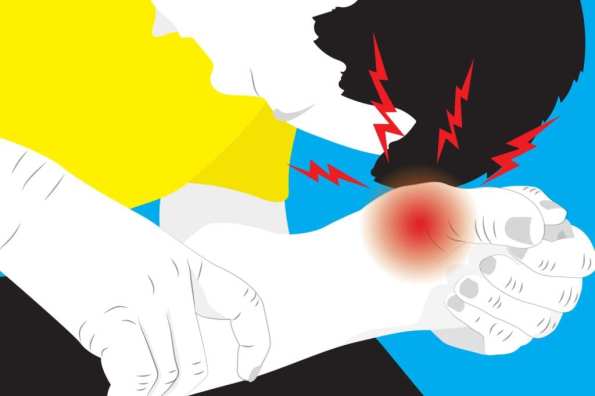
Jichtaanvallen treden ook vaak op bij en rond pezen, zoals achter de enkel (de achillespees) en bij de knieschijf. In een Chinese studie voerden onderzoekers echografieën uit op 31 jichtpatiënten tijdens acute aanvallen om te zoeken naar betrokkenheid van enthesen, weefsel dat ligamenten of pezen en botten verbindt. Ze vonden dat 71 procent van de patiënten afwijkingen vertoonde met ten minste één enthese, met de meest voorkomende gebieden met betrekking tot de achillespees achter de enkel en de pees net onder de knieschijf. Dit zou een gemiste kans kunnen zijn om eerder jicht te diagnosticeren.
“Mensen met jicht die pijn en zwelling in de achillespees krijgen, kunnen bijvoorbeeld denken dat het een overbelasting van de pees is of een andere peesblessure, maar de kans is groot dat het een jichtaanval is en zal reageren op de behandeling van jicht”, zegt Dr. Fields. Lees op de website van CreakyJoints (engelstalig) hier meer over de bevindingen.
Lichamelijke activiteit is gekoppeld aan minder jichtaanvallen en minder ontstekingen. Onderzoekers van de Rutgers Robert Wood Johnson School of Medicine in New Jersey en het Ohio State University Wexner Medical Center ontdekten dat jichtpatiënten die fysiek actief waren (op basis van hun antwoorden op een enquête genaamd de International Physical Activity Questionnaire, of IPAQ) meer dan 12 keer minder jichtaanvallen per jaar hadden, evenals dramatische dalingen in CRP (C-reactive-protein, een maat voor ontsteking) en zelfrapportage van pijn in vergelijking met mensen die inactief waren. De bevinding benadrukt het “belang van het opnemen van fysieke activiteit als een mogelijke aanvullende behandelingsoptie tijdens de intervallen tussen de aanvallen”, zeggen de auteurs van de studie.
Jichtpatiënten die de spoedeisende hulp afdeling voor aanvallen bezoeken, missen een kans om een betere behandeling te krijgen. Een jichtaanval kan één van de meest plotselinge pijnlijke ervaringen zijn – veel patiënten zeggen dat zelfs het aanraken van hun tenen tegen een laken ondraaglijk is. Het is dan ook geen wonder dat veel mensen de spoedeisende hulppost bezoeken om hulp te krijgen voor een jichtaanval. Maar gegevens van Rutgers onderzoekers in New Jersey wezen uit dat bijna 30 procent van de jichtpatiënten wordt ontslagen van de spoedeisende hulppost zonder een ontstekingsremmend medicijn (wat de eerste keuze is voor de behandeling van een aanval). Ook het starten van een urinezuurverlagende therapie, zoals allopurinol of febuxostat, was zeldzaam.
“De behandeling van jicht op de [spoedafdeling] is suboptimaal en volgt vaak niet de vastgestelde richtlijnen”, concluderen de auteurs. Als u de spoedeisende hulppost bezoekt voor een jichtaanval, is het aan te raden dat u nadien de arts die uw jicht behandelt (zoals een huisarts, internist of reumatoloog) verzoekt om uw behandeling te bekijken en te beslissen of er een verandering nodig is.
Het gebruik van methotrexaat met pegloticase (Krystexxa) kan de behandeling van jicht effectiever maken.Pegloticase (Krystexxa) is een via een infuus toegediend medicijn dat wordt gebruikt om niet goed onder controle te krijgen jicht te behandelen. Het gaat hier om patiënten die aanvallen blijven krijgen ondanks dat ze een urinezuur-verlagende behandeling ondergaan. Het is sinds 2010 goedgekeurd maar het succes ervan is beperkt omdat veel mensen bijwerkingen zoals infuusreacties of antistoffen tegen het middel ontwikkelen, waardoor het niet geod verdragen wordt of ondoeltreffend is. Nu is uit twee voorlopige studies gebleken dat de reactie van patiënten op een pegloticase infuus is te verbeteren door het veelgebruikte anti-gewrichtsreuma middel methotrexaat (MTX) er bij te geven, zowel voor als tijdens de infusiebehandeling. Lees op de website van CreakyJoints (engelstalig) hier meer over de bevindingen.
Het reumatoide artritis medicijn anakinra (Kineret) blijft veelbelovend in jicht. Tijdens een acute jichtaanval nemen patiënten vaak niet-steroïde ontstekingsremmende middelen zoals NSAID’s (bv diclofenac, naproxen) of colchicine om de pijn snel te verminderen. Maar voor degenen die die medicijnen niet kunnen nemen, toont onderzoek aan dat een biologisch medicijn genaamd anakinra, dat een ontstekingsremmend eiwit genaamd interleukine-1 (IL-1) remt, een effectieve optie kan zijn. In de studie, uitgevoerd door een onderzoeksteam onder leiding van Kenneth Saag, MD, van de Universiteit van Alabama in Birmingham, werden patiënten met moeilijk te behandelen jicht gerandomiseerd om ofwel vijf dagen van 100 mg of 200 mg anakinra, die wordt geïnjecteerd onder de huid, of een eenmalige dosis van een injecteerbaar steroïde medicijn genaamd triamcinolone (te vergelijken met prednison) te ontvangen. Pijnniveaus werden vergelijkbaar verminderd in beide groepen (er was geen verschil tussen de twee doseringen van anakinra). Patiënten op anakinra deden het iets beter dan die op triamcinolon op sommige andere maatregelen.
“Dit is een potentieel nieuw wapen voor de behandeling van jicht,” zegt Dr. Domingues.
Patiënten met jicht en diabetes hebben een hoog percentage amputaties in vergelijking met gezonde volwassenen. Onderzoekers analyseerden gegevens van een grote Amerikaanse schadeclaims database (190 miljoen volwassenen) om de percentages van amputaties in vier groepen patiënten vast te stellen: die met alleen jicht, die met alleen diabetes, die met zowel jicht als diabetes, en gezonde mensen met geen van beide aandoeningen. Zij vonden dat patiënten met jicht maar niet met diabetes een ongeveer drievoudige toename in amputaties hadden in vergelijking met patiënten zonder een van beide ziekten. Bovendien hadden patiënten met zowel jicht als diabetes een bijzonder verhoogd risico op amputatie in vergelijking met patiënten met alleen diabetes.
“Dit benadrukt dat jicht op zichzelf een [ernstige] aandoening is en wanneer het samen met diabetes voorkomt, kan het patiënten in groot gevaar brengen,” zei Dr. Petryna, MD, in een video voor RheumNow.com. “Het vereist strikte urinezuurcontrole bij patiënten die beide aandoeningen hebben, en een agressieve behandeling.”
Het verliezen van gewicht heeft een bescheiden invloed op de urinezuurniveaus bij zwaarlijvige volwassenen zonder jicht – en de diabetes drug liraglutide helpt nog meer. Vanwege de bekende relatie tussen jicht en overgewicht, probeerden Deense onderzoekers het effect van gewichtsverlies op de urinezuurspiegels in het bloed te bestuderen. Ze namen 156 volwassenen die zwaarlijvig waren en knie-artritis hadden – maar geen jicht hadden – en boden hen een intensieve acht weken durende dieetinterventie aan die was ontworpen om gewichtsverlies te bevorderen (800 tot 1.000 calorieën per dag), waarna ze gerandomiseerd werden naar een jaar lang onderhoudsplan voor het gewicht. De helft zou een placebo krijgen en de helft zou liraglutide krijgen, een medicijn dat vaak wordt gebruikt om diabetes te behandelen en dat ook bekend staat om het veroorzaken van gewichtsverlies. De groep verloor gemiddeld 27,5 pond tijdens het eerste deel van de studie. Die op de medicatie verloren een extra negen pond gemiddeld, terwijl die op de placebo hun gewichtsverlies gehandhaafd.
Wat betreft urinezuur, leidde het intensieve dieet tot een daling van 0,21 mg/dL gemiddeld, maar in het volgende jaar daalde de liraglutide groep gemiddeld nog eens 0,48 mg/dL. De auteurs concludeerden dat “liraglutide een potentieel nieuw serum urinezuurverlagend medicijnmechanisme biedt bij zwaarlijvige patiënten, met mogelijke implicaties voor de behandeling van jicht”
Lupus

Slechte slaapkwaliteit in lupus komt veel voor en verdient meer aandacht. In een studie van 92 lupuspatiënten uit Malta rapporteerde 55 procent dat ze een slechte slaapkwaliteit hadden. Patiëntfactoren die een slechte slaap voorspelden waren onder andere pijnniveaus, depressie en een verminderde nierfunctie. “Aangezien een slechte kwaliteit van de slaap significant gerelateerd is aan vermoeidheid en functionele beperkingen, is de identificatie en het beheer ervan belangrijk voor het welzijn van de patiënten”, concludeerden de auteurs.
De zelfgerapporteerde symptomen van lupuspatiënten verbeteren niet binnen de eerste jaren na de diagnose. Wanneer je de patiënt-gerapporteerde uitkomstmaten (PROMs, Patient Reported Outcome Measures) volgt, leer je meer over de impact van de ziekte op het dagelijks leven van de patiënten. Zweedse onderzoekers begonnen PROMs te vergelijken van mensen met reumatische artritis en die met lupus in de eerste vijf jaar na de diagnose. Ze ontdekten dat, hoewel RA-patiënten aanvankelijk slechtere scores rapporteerden, ze met zes maanden begonnen te verbeteren. Maar voor lupus patiënten bleven hun scores vrijwel gelijkt ijdens de gehele studieperiode – zij verbeterden niet in tijd.
“Het gebrek aan verbetering in [PROS] bij patiënten met SLE kan te wijten zijn aan de impact van de ziekte op meerdere orgaansystemen, hetgeen langer kan vergen om de symptomen op te lossen dan bij RA”, concludeerden de auteurs.
Voclosporine verslaat de standaardbehandeling voor lupus nefritis. Volgens RheumNow.com, overtrof voclosporine, een calcineurine remmend medicament dat goed heeft gepresteerd in een eerdere fase II klinische studie, aanzienlijk de standaard therapie (mycofenolaat) voor lupus nefritis, of lupus die nierbeschadiging heeft veroorzaakt.
In de studie, bleven 357 patiënten met actieve lupus nefritis op de standaard onderhoudsbehandeling van mycofenolaat en werden vervolgens gerandomiseerd om ofwel voclosporine of een placebo te krijgen. Een maat voor de nierfunctie, de zogenaamde renal response, werd bij 41 procent van de patiënten met voclosporine gezien, maar slechts bij 22 procent van de patiënten met een placebo.
Hoge renal response op de medicatie werd ook gezien bij Hispanic en zwarte patiënten, die meer ernstige en moeilijk te behandelen lupus nefritis kunnen hebben. Zo werd een renal response bij Hispanic patiënten gezien in 39 procent van de voclosporine groep na een jaar in vergelijking met 19 procent van de controles; renal response werd tevens gezien in 46 procent van de zwarte patiënten op voclosporine in vergelijking met 16 procent van de controles. Lees meer over de bevindingen via MedPage Today.
Belimumab (Benlysta) met standaardtherapie verbetert de behandeling van lupus nefritis. In aanvullend veelbelovend nieuws voor lupus nefritis bleek de reeds goedgekeurde lupusmedicatie Benlysta bijzonder effectief te zijn bij patiënten met nieraandoeningen, aldus Dr. Domingues. “Het is zeer belangrijk voor de lupusgemeenschap om een bekende optie met bekende veiligheid te hebben,” zegt hij.
In de studie, een twee jaar durende, gerandomiseerde en dubbelblinde studie (zodat noch onderzoekers noch patiënten wisten wie welke medicatie kreeg), werden 448 patiënten met actieve lupus nefritis gerandomiseerd om belimumab of een placebo te krijgen naast de standaard immunosuppressieve behandeling (sommige waren op cyclofosfamide gevolgd door azathioprine en anderen waren op mycofenolaat mofetil (MMF). Drieënveertig procent van de patiënten die belimumab kregen, hadden een betere renal response dan 32 procent van de patiënten die placebomedicatie kregen. Belangrijk is dat “met belimumab behandelde patiënten een significant 49 procent lager risico hadden op een niergerelateerd voorval of overlijden op enig moment tijdens het onderzoek in vergelijking met ontvangers van placebo’s”, meldde Rheumatology Advisor.
Te weinig hydroxychloroquine in de bloedbaan verhoogt het risico op bloedstolsels in lupus. Een verhoogd risico op bloedstolsels in de longen (longembolie) of de diepe aders van de benen (trombosebeen) is slechts een van de vele medische problemen die de auto-immuunziekte lupus kunnen vergezellen – en het is bekend dat de eerste lijn lupus medicatie hydroxychloroquine (HCQ, Plaquenil) het risico op trombose [bloedstolsel] in lupus vermindert, volgens Michelle A. Petri, MD, MPH, een professor in de geneeskunde aan de Johns Hopkins University, in een presentatie op EULAR. In een nieuwe studie probeerden Dr. Petri en collega’s te begrijpen hoe het hebben van de juiste dosis/bloedspiegels van HCQ het risico op bloedstolsels beïnvloedt.
Ze ontdekten dat het aantal trombosegevallen met 13 procent afnam voor elke toename van 200 ng/mL in gemiddelde hydroxychloroquine in het bloed. Belangrijk is dat de onderzoekers vonden dat de dosis HCQ die u wordt voorgeschreven niet voorspelt wat uw bloedniveau van HCQ zal zijn, wat suggereert dat de beste manier om de dosis te personaliseren voor maximale bescherming tegen stolsels is om het hele bloed HCQ regelmatig te controleren en de dosis aan te passen als dat nodig is. Lees op de website van CreakyJoints (engelstalig) hier meer over de bevindingen.
Lupuspatiënten lopen een hoger risico op een antimalaria-geïnduceerde retinopathie (oogschade). Terwijl eerstelijns lupusmedicijnen hydroxychloroquine en chloroquine voor patiënten levensreddend kunnen zijn, moet de dosering ervan wel in balans zijn met een risico op een type oogletsel dat retinopathie wordt genoemd. Vergeleken met mensen op deze medicijnen voor andere medische aandoeningen, zoals reumatoïde artritis, hadden patiënten met systemische lupus erythematosus (SLE) een groter risico op retinopathie, mogelijk als gevolg van langdurige blootstelling aan die medicijnen, volgens een nieuwe studie van Canadese onderzoekers. Het is van cruciaal belang om samen te werken met een reumatoloog en een oogarts wanneer u deze geneesmiddelen gebruikt om een evenwicht te vinden voor een effectieve dosering, terwijl eventueel ontwikkelen van oogschade an geod in de gaten gehouden kan worden. Lees op de website van CreakyJoints (engelstalig) hier meer over de bevindingen.
Osteoartritis (OA, artrose)
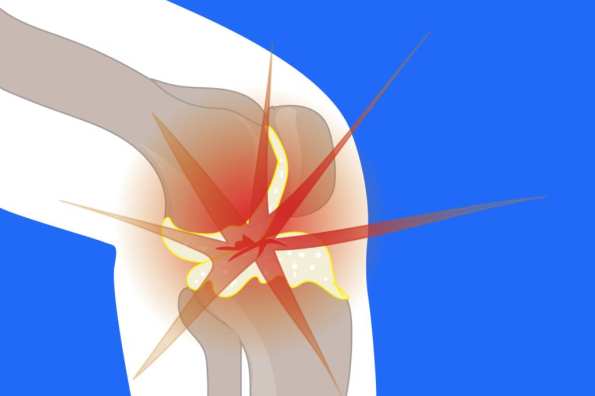
Artrose wordt vaak gevolgd door andere gezondheidskwesties, zoals depressie, hartziekten, diabetes en meer. Een groot Zweeds bevolkingsonderzoek had tot doel te onderzoeken met welke aandoeningen mensen zoalnog meer worden gediagnosticeerd te worden nadat ze een diagnose van heup- of knie-artrose hebben gekregen. Ze bestudeerden 36.465 mensen met OA in de knie en 14.477 met OA in de heupen en vergeleken deze met volwassenen zonder enige OA-diagnose. Ze ontdekten dat mensen met artrose een verhoogd risico hadden, in vergelijking met de algemene bevolking, om gezondheidszorg te zoeken voor depressie, hart- en vaatziekten, rugpijn en osteoporose.
“Gezien de hoge prevalentie van artrose in de meeste delen van de wereld, is dergelijke informatie nodig voor een betere patiëntenzorg,” zei studie co-auteur Martin Englund, MD, PhD, in EULAR Congress News. Hij zei dat het belangrijk is voor reumatologen om regelmatig artrosepatiënten te beoordelen op andere aandoeningen. “We raden clinici aan om de ‘hele’ patiënt te evalueren bij het zien van een artrosepatiënt in de dagelijkse praktijk. En in het bijzonder zich bewust zijn van tekenen of symptomen van niet-gediagnosticeerde hart-en vaatziekten, en diabetes screening te overwegen,” zei hij.
Gewicht kan een rol spelen bij artrose-pijn. Terwijl overgewicht of obesitas een bekende risicofactor voor artrose is, voor een deel omdat het dragen van extra gewicht extra druk legt op gewichtdragende gewrichten zoals de knieën, enkels en voeten, is er minder bekend over hoe iemands gewicht invloed heeft op de pijn bij handartrose.
In een Noorse studie beantwoordden 300 patiënten met handartrose enquetes over hun pijn, hun pijn werd ook beoordeeld in een lichamelijk onderzoek, en ze hadden echografieën van hun handen, voeten en knieën om te zoeken naar synovitis, oftewel zwelling en ontsteking van het kapsel rond een gewricht. De onderzoekers vonden dat mensen met een hogere lichaamsmassa-index (BMI) en tailleomvang een hogere pijnintensiteit in hun handen, voeten, knieën en heupen rapporteerden – en dit werd niet verklaard door hogere niveaus van synovitis in de gewrichten. Hoewel de auteurs geen definitieve verklaring kunnen geven, vermoeden ze dat het verband “ten minste gedeeltelijk kan worden veroorzaakt door een hogere prevalentie van centrale pijngevoeligheid bij personen met een hogere BMI”.
Meer onderzoek heeft recent aangetoond dat hydroxychloroquine niet effectief is voor erosie (gewrichtsscahde) vormende handartrose. Deze medicatie heeft zich bewezen bij auto-immuunziekten, waaronder lupus en reumatoïde artritis, maar sommige artsen hebben ook hydroxychloroquine gebruikt voor de behandeling van geselecteerde patiënten met artrose (OA), ook al is het niet officieel goedgekeurd voor dit doel. In een nieuwe studie hebben onderzoekers uit Duitsland willekeurig patiënten met erosieve hand OA toegewezen om 200 tot 400 mg hydroxychloroquine per dag of een placebo te nemen gedurende 52 weken. Iedereen in de studie nam ook een NSAID (niet-steroïdaal anti-inflammatoir geneesmiddel zoals ibuprofen, diclofenac, naproxen), wat een standaard therapie is voor handartrose. Na afloop van de studie waren er geen significante verschillen tussen de twee groepen. Lees op de website van CreakyJoints (engelstalig) hier meer over de bevindingen.
Emotionele respons op pijn speelt een rol bij knie-artrose en zelfs bij de noodzaak van een knieprothese-operatie. In een studie uit Spanje werd gekeken naar patiënten met knie-artrose, van wie sommigen een knieprothese-operatie hadden ondergaan en anderen conservatieve behandelingen voor kniepijn uitprobeerden. De onderzoekers hadden de patiënten een aantal vragenlijsten laten invullen om de pijn te beoordelen, evenals de emotionele componenten die ermee samenhangen, zoals enquêtes over depressie en pijncatastrofie (wanneer je de neiging hebt om je meer te richten op pijn of je meer hulpeloos voelt over je vermogen om het te controleren dan gemiddeld). De patiënten werden beoordeeld door middel van een lichamelijk onderzoek, een echografie en lieten hun bloed afnemen om te zoeken naar ontstekingsniveaus. De onderzoekers vonden dat er niet altijd een verband bestaat tussen de pijnklachten van een patiënt en de status van hun gezamenlijke gezondheid – en dat emotionele factoren deze discrepantie kunnen verklaren.
“Het uitwerken van strategieën voor pijnbestrijding zou de [pijncatastrofie] kunnen verbeteren en daarmee de behoefte aan een totale knievervanging kunnen verminderen”, schreven de auteurs.
Artrose kan dramatische gevolgen hebben voor de mobiliteit en de behoefte aan hulp bij dagelijkse activiteiten voor mensen met matige tot ernstige pijn. Een a href=”https://ard.bmj.com/content/79/Suppl_1/796.2″ target=”_blank” rel=”noopener noreferrer”>team van onderzoekers van de Universiteit van Leeds in het Verenigd Koninkrijk groepeerde 1.750 artrose-patiënten in drie groepen – milde, gematigde en ernstige pijn – op basis van de zelfevaluaties van de patiënten en beoordelingen van hun artsen. Zij vonden dramatische verschillen in mobiliteit en de behoefte aan hulp bij dagelijkse activiteiten per groep. De mobiliteit werd beïnvloed bij 78 procent van de patiënten met ernstige pijn, vergeleken met 41 procent van de patiënten met lichte pijn. Bijna een derde van de patiënten met ernstige pijn moest hun huis aanpassen als gevolg van hun artrose, vergeleken met 11 procent van de mensen met lichte artrose. En 42 procent van de mensen met ernstige artrose had hulp nodig van een verzorger voor de dagelijkse activiteiten (zoals hulp bij het winkelen, koken of reizen buitenshuis), vergeleken met 9 procent voor milde artrose.
“Deze studie benadrukt de grote behoefte aan hulp bij dagelijkse activiteiten en aanpassingen aan het huis”, schrijven de auteurs van de studie. “De ongeziene kosten voor de patiënt met matige tot ernstige artrose-pijn zijn aanzienlijk.””
Fibromyalgie

Veel fibromyalgie patiënten hebben symptomen die overeenkomen met axiale spondyloartritis. Fibromyalgie is vaak moeilijk te diagnosticeren en te behandelen omdat het vaak voorkomt naast andere chronische ziekten. Een gemeenschappelijk gebied met mogelijke verwarring wordt gezien bij fibromyalgie en axiale spondyloartritis (axSpA). Om verschillende redenen vermoeden artsen dat axSpA bij veel mensen die er symptomen van hebben, niet gediagnosticeerd wordt.
Onderzoekers, waaronder die van onze non-profit organisatie, de Global Healthy Living Foundation (GHLF), willen meer weten over deze potentiële overlapping door het enqueteren van 231 patiënten die een diagnose van fibromyalgie meldden in onze ArthritisPower onderzoeksregister.
Zij vonden dat terwijl slechts 40 mensen rapporteerden dat ze ook een diagnose van axiale spondyloartritis hadden, veel patiënten met fibromyalgie en zonder axSpA-diagnose meldden dat ze symptomen hadden die overeenkwamen met die van axSpA. In totaal meldde 12 procent van de fibromyalgie-patiënten in de studie alle symptomen die in overeenstemming zijn met de patiënt-gerapporteerde synptomen uit een reeks van gemeenschappelijke criteria voor axiale spondyloartritis. Lees op de website van CreakyJoints (engelstalig) hier meer over de bevindingen.
Water- en lichaamsbeweging helpt fibromyalgie vermoeidheid te bestrijden, maar het is belangrijk om dit vast te blijven houden in een regelmatige routine.. Onderzoekers wilden begrijpen of het doen van oefeningen op het land of op het water leiden tot een verschil in vermoeidheid bij mensen die leven met fibromyalgie. Nadat ze de patiënten hadden gerandomiseerd naar twee verschillende trainingsschema’s (waarbij zes maanden lang drie dagen per week werd getraind) en een controlegroep, ontdekten ze dat zowel wateroefeningen als landoefeningen een significante impact hadden op de vermindering van de vermoeidheid. Toen de deelnemers echter stopten met het volgen van het programma en nog eens drie maanden later werden geëvalueerd, waren de voordelen niet blijvend. De onderzoekers concludeerden dat “deelname aan regelmatige lichaamsbeweging” kan helpen bij het beheersen van de vermoeidheid in deze patiëntengroep.
Vitamine D kan helpen bij de ondersteuning van een fibromyalgie behandeling bij patiënten met lage niveaus van de vitamine. In een Egyptische studie hebben de onderzoekers 100 patiënten met fibromyalgie en een tekort aan vitamine D hadden op basis van bloedtesten in twee groepen gerandomiseerd. De ene kreeg het antidepressivum duloxetine (Cymbalta) plus vitamine D-supplementatie op recept; de andere kreeg alleen de duloxetine en een placebo. Na zes maanden verbeterden de bloedspiegels van vitamine D in de behandelgroep aanzienlijk, evenals hun scores die de functionele status, de kwaliteit van leven en de psychologische status beoordeelden. “Vitamine D-supplement is effectief als een toegevoegde therapie bij fibromyalgie-patiënten met vitamine D-tekort,” concludeerden de onderzoekers.
Mentale Gezondheid, Welbevinden en Meer

Patiënten met reumatische artritis die door reumaaverpleegkundigen worden gezien bij de controles, doen het net zo goed als degenen die door reumatologen zelf worden behand1eld. Om erachter te komen of verpleegkundigen met een extra opleiding in de reumatologie in staat zijn om zorg te verlenen in plaats van reumatologen – en dus lange wachttijden om een afspraak te maken verkorten – namen onderzoekers 236 reumapatiënten (RA) en wezen ze willekeurig toe aan twee groepen. De helft had regelmatig controles met een reumatoloog en de andere helft had hun afspraken met een reumaverpleegkundige. De onderzoekers vonden dat zowel patiënten die een reumaverpleegkundige zagen als patiënten die een reumatoloog (arts) zagen het even goed deden op het gebied van ziekteactiviteitsscores en patiënt-gerapporteerde uitkomstmaten (PROMs) m.b.t. het dagelijks functioneren, kwaliteit van leven, en depressie. Lees op de website van CreakyJoints (engelstalig) hier meer over de bevindingen.
Het is belangrijk voor reumapatiënten om metingen van pijn, vermoeidheid en gewrichtsstijfheid bij te houden. Patiënt-gerapporteerde uitkomstmaten (PROMs) zijn meestal korte vragenlijstjes die verschillende gezondheidsklachten beoordelen, zoals pijn, vermoeidheid, slaap en meer. Ze zijn niet alleen een zeer belangrijk instrument voor het meten en monitoren van ziekten, maar ze zijn ook belangrijk tijdens klinische studies voor medicijnen of andere behandelingen, omdat ze kunnen beoordelen hoe verschillende therapieën de patiënten beïnvloeden en welke symptomen voor hen van belang zijn.
De Global Health Living Foundation (GHLF) en CreakyJoints zijn begonnen te onderzoeken welke PROMs het meest van belang zijn voor artritispatiënten. Toen patiënten werd gevraagd om een aantal symptomen te kiezen om bij te houden gedurende drie maanden en vervolgens te rangschikken welke het belangrijkst leken om bij te houden, bevatte de top vijf onderzoeken die vermoeidheid, fysieke functie, pijnintensiteit, pijninterferentie en de duur van de gewrichtsstijfheid beoordeelden. Lees op de website van CreakyJoints (engelstalig) hier meer over de bevindingen.
Het omgaan met mentale vermoeidheid is vooral belangrijk voor reumapatiënten die werken.
Bijna 65 procent van de mensen met reumatische aandoeningen hebben ernstige vermoeidheid, waarbij de meerderheid van deze rapportageproblemen in het werk leidt tot verzuim en vervroegde uittreding, let op Ierse onderzoekers, die probeerden te bestuderen hoe verschillende soorten vermoeidheid (algemene, mentale, fysieke, verminderde motivatie en verminderde activiteit) het vermogen van mensen om te werken hebben beïnvloed. Ze onderzochten 234 mensen met reumatische aandoeningen die op dat moment aan het werk waren. Hoewel fysieke vermoeidheid de meest voorkomende soort was, vonden de onderzoekers dat het hebben van mentale vermoeidheid de meest significante voorspeller was van moeilijkheid om aan de eisen van het werk te voldoen. “
Zelfmanagement interventies gericht op mentale vermoeidheid en werkvermogen zijn nodig voor personen met reumatische aandoeningen om de eisen van hun werk te beheersen,” concludeerden de onderzoekers.
Depressie komt vaak voor en wordt ondergediagnosticeerd bij patiënten met reumatische aandoeningen. Italiaanse onderzoekers probeerden de aanwezigheid en de perceptie van depressieve symptomen bij patiënten met verschillende soorten reumatische aandoeningen te bestuderen. Nadat ze 192 patiënten hadden onderzocht, vonden ze dat slechts 18 procent niet depressief was. Hoewel ze vaststelden dat ongeveer 35 procent van de patiënten een subklinische of milde depressie had, 22 procent een matige depressie had en 25 procent een matig of ernstig depressieniveau, verklaarde slechts 8 procent van de mensen zélf “depressieve symptomen te hebben”, wat aantoont dat depressie in deze patiëntenpopulatie grotendeels ongediagnosticeerd is.
“Deze resultaten benadrukten dat depressieve symptomen over het hoofd worden gezien door artsen en niet worden waargenomen door patiënten,” concludeerden de onderzoekers. “Deze resultaten suggereerden dat screening op depressie deel zou moeten uitmaken van de routinematige klinische beoordeling van reumatische patiënten.”
Levensstijlveranderingen komen van pas bij het behandelen van van reumatische aandoeningen. EULAR presenteerde aanbevelingen voor gezonde leefstijlstrategieën om progressie van reumatische en musculoskeletale aandoeningen te voorkomen, meldde Healio Rheumatology. Hoewel niets bijzonder verrassend is – doe aërobe en krachttraining oefeningen, eet een evenwichtig dieet, praat met uw arts over het ideale gewicht voor u en pas de medicatiedoses aan wanneer mensen aankomen of afvallen, wees matig met alcoholgebruik en beperk alcohol als u jicht heeft, stop met roken, etctera etcetera – is het toch veelbetekend dat grote medische organisaties het belang van leefstijlveranderingen zien en benadrukken als zinvolle en goede aanvulling op de medische behandeling.
Bronnen:
Albert J, et al. Pegloticase Response Rate in Uncontrolled Gout
Patients Co-Treated with Methotrexate: Experience in a Community
Rheumatology Practice. Annals of the Rheumatic Diseases. Volume 79, Supplement 1. 2020. https://ard.bmj.com/content/79/Suppl_1/453.2.
Alten R, et al. Filgotinib Provided Rapid and Sustained Improvements
in Functional Status, Pain, and Health-Related Quality of Life, and
Reduced Fatigue Over Time in Patients with Rheumatoid Arthritis Who Are
Methotrexate-Naïve: Results from the FINCH 3 Study. Annals of the Rheumatic Diseases. Volume 79, Supplement 1. 2020. https://ard.bmj.com/content/79/Suppl_1/638.
Arriens C, et al. AURORA Phase 3 Study Demonstrates Voclosporin
Statistical Superiority Over Standard of Care in Lupus Nephritis. Annals of the Rheumatic Diseases. Volume 79, Supplement 1. 2020. https://ard.bmj.com/content/79/Suppl_1/172.2.
Bjork M, et al. Patient-Reported Outcome Measures in Swedish Patients
with Recent-Onset SLE versus RA in the First 60 Months After Diagnosis.
Annals of the Rheumatic Diseases. Volume 79, Supplement 1. 2020. https://ard.bmj.com/content/79/Suppl_1/1499.2.
Botson J, et al. Pegloticase Response Improvement by Co-Treatment
with Methotrexate: Results from the Mirror Open-Label Clinical Trial in
Patients with Uncontrolled Gout. Annals of the Rheumatic Diseases. Volume 79, Supplement 1. 2020. https://ard.bmj.com/content/79/Suppl_1/446.3.
Braun J, et al. Secukinumab 150 mg Significantly Improved Signs and
Symptoms of Non-Radiographic Axial Spondyloarthritis: 52-Week Results
from the Phase III Prevent Study. Annals of the Rheumatic Diseases. Volume 79, Supplement 1. 2020. https://ard.bmj.com/content/79/Suppl_1/69.
Brunetti L, et al. Readmission Risk and Quality of Care in Patients Presenting to the Emergency Department with Gout Flares. Annals of the Rheumatic Diseases. Volume 79, Supplement 1. 2020. https://ard.bmj.com/content/79/Suppl_1/446.2.
Cao H, et al. What Is Lower Extremity Entheseal Involvement in Acute Gout Attack? An Ultrasound Study. Annals of the Rheumatic Diseases. Volume 79, Supplement 1. 2020. https://ard.bmj.com/content/79/Suppl_1/1760.2.
Charnow J. Belimumab Plus Standard Lupus Nephritis Therapy Improves Renal Responses. June 15, 2020. Rheumatology Advisor. https://www.rheumatologyadvisor.com/home/topics/systemic-lupus-erythematosus/belimumab-plus-standard-lupus-nephritis-therapy-improves-renal-responses.
Chavez-Alvarez LA, et al. Adherence to Treatment and Disease Activity on Rheumatoid Arthritis. Annals of the Rheumatic Diseases. Volume 79, Supplement 1. 2020. https://ard.bmj.com/content/79/Suppl_1/1895.2.
Coates LC, et al. Adalimumab Introduction Versus Methotrexate Dose
Escalation in Patients with Inadequately Controlled Psoriatic Arthritis:
Results from a Randomized Phase 4 Control Study. Annals of the Rheumatic Diseases. Volume 79, Supplement 1. 2020. https://ard.bmj.com/content/79/Suppl_1/33.2.
Conaghan PG, et al. How Does Osteoarthritis Pain Impact Function,
Mobility, and Requirement for Help in Daily Activities in European
Patients? Annals of the Rheumatic Diseases. Volume 79, Supplement 1. 2020. https://ard.bmj.com/content/79/Suppl_1/796.2.
Connolly D, et al. Factors Associated with Meeting Work Demands for Individuals with Rheumatic Diseases. Annals of the Rheumatic Diseases. Volume 79, Supplement 1. 2020.https://ard.bmj.com/content/79/Suppl_1/166.1.
Cush J. Day 3: Top 5 from EULAR 2020. June 10, 2020. https://rheumnow.com/news/day-3-top-5-eular-2020.
Cush J. Day 4. Top 3 from EULAR 2020: June 11, 2020. https://rheumnow.com/news/day-4-top-3-eular-2020.
Don’t Miss Common Cormorbidities That Arise After Incident Knee or Hip Osteoarthritis. EULAR Congress News. June 4, 2020. https://www.eularcongressnews.com/wp-content/uploads/2020/06/EULAR20_ThursJune4LowRes.pdf.
Fehr A, et al. Efficacy of Adding Caffeine to the Treatment Regimen
in Reducing Methotrexate Intolerance in Patients with Rheumatoid
Arthritis: A Randomized Controlled Study. Annals of the Rheumatic Diseases. Volume 79, Supplement 1. 2020. https://ard.bmj.com/content/79/Suppl_1/1945.1.
Furie R, et al. Bliss-LN: A Randomized, Double-Blind,
Placebo-Controlled Phase 3 Trial of Intravenous Belimumab in Patients
with Active Lupus Nephritis. Annals of the Rheumatic Diseases. Volume 79, Supplement 1. 2020. https://ard.bmj.com/content/79/Suppl_1/103.
Garrido-Cumbrera M, et al. The Impact of Axial Spondyloarthritis on
Patients’ Sexual Life: Results from the European Map of Axial
Spondyloarthritis (EMAS). Annals of the Rheumatic Diseases. Volume 79, Supplement 1. 2020. doi: http://dx.doi.org/10.1136/annrheumdis-2020-eular.4277.
Gavigan K, et al. Patient Perceptions of Fibromyalgia Symptoms and the Overlap with Axial Spondyloarthritis. Annals of the Rheumatic Diseases. Volume 79, Supplement 1. 2020. https://ard.bmj.com/content/79/Suppl_1/1650.1.
Gavilán Carrera B, et al. Comparative Effectiveness of Land and
Water-Based Exercise Programs on Fatigue in Women with Fibromyalgia:
Preliminary Findings from the Al-Andalus Randomised Controlled Trial.
Volume 79, Supplement 1. 2020. https://ard.bmj.com/content/79/Suppl_1/927.2.
Genovese MC, et al. Efficacy and Safety of Upadactinib in Patients
with Active Psoriatic Arthritis and Inadequate Response to Biologic
Disease-Modifying Antirheumatic Drugs (Select-PsA-2): A Double-Blind,
Randomized, Controlled Phase 3 Clinical Trial. Annals of the Rheumatic Diseases. Volume 79, Supplement 1. https://ard.bmj.com/content/79/Suppl_1/139.full.
Gianfrancesco M, et al. Characteristics Associated With
Hospitalisation for COVID-19 in People With Rheumatic Disease: Data From
the COVID-19 Global Rheumatology Alliance Physician-Reported
Registry. Annals of the Rheumatic Diseases. May 29, 2020. doi: https://doi.org/10.1136/annrheumdis-2020-217871.
Gloersen M, et al. Associations Between Measures of
Overweight/Obesity and Joint Pain in Persons with Hand Osteoarthritis:
Results from the Nor-Hand Study. Annals of the Rheumatic Diseases. Volume 79, Supplement 1. 2020. https://ard.bmj.com/content/79/Suppl_1/788.1.
Gottlieb AB, et al. Comparison of Secukinumab Versus Adalimumab
Efficacy on Skin Outcomes in Psoriatic Arthritis: 52 Week Results from
the Exceed Study. Annals of the Rheumatic Diseases. Volume 79, Supplement 1. 2020. https://ard.bmj.com/content/79/Suppl_1/763.2.
Haugeberg G, et al. The Impact of Skin Itching on Health-Related
Quality of Life in Psoriatic Arthritis Outpatient Clinic Patients. Annals of the Rheumatic Diseases. Volume 79, Supplement 1. 2020. https://ard.bmj.com/content/79/Suppl_1/1689.1.full.
Hebeisen M, et al. Spinal Radiographic Progression in Axial
Spondyloarthritis and the Impact of Classification as Nonradiographic
Versus Radiographic Disease. Annals of the Rheumatic Diseases. Volume 79, Supplement 1. 2020. https://ard.bmj.com/content/79/Suppl_1/50.
Hetland ML, et al. A Multicenter Randomized Study in Early Rheumatoid
Arthritis to Compare Active Conventional Therapy Versus Three
Biological Treatments: 24-Week Efficacy Results of the NORD-STAR
trial. Annals of the Rheumatic Diseases. Volume 79, Supplement 1. 2020. https://ard.bmj.com/content/79/Suppl_1/13.
Hoeper JR, et al. Effect of Nurse-Led-Care on Patient Outcomes in
Rheumatoid Arthritis in Germany: A Multicentre Randomised Controlled
Trial. Annals of the Rheumatic Diseases. Volume 79, Supplement 1. 2020. https://ard.bmj.com/content/79/Suppl_1/97.
Ingegnoli F, et al. The Underworld of Depressive Symptoms in Rheumatic Diseases: Overlooked, Unrecognized, or Unperceived? Annals of the Rheumatic Diseases. Volume 79, Supplement 1. 2020. https://ard.bmj.com/content/79/Suppl_1/1886.2.
Interview with Alexis Ogdie, MD, rheumatologist and director of the Penn Psoriatic Arthritis Clinic in Philadelphia, Pennsylvania
Interview with Theodore R. Fields, MD, a rheumatologist at Hospital for Special Surgery in New York City
Interview with Vinicius Domingues, MD, a rheumatologist in Daytona Beach, Florida
Juge PA, et al. Methotrexate and Rheumatoid Arthritis Associated Interstitial Lung Disease. Annals of the Rheumatic Diseases. Volume 79, Supplement 1. https://ard.bmj.com/content/79/Suppl_1/25.1.
Kedor C, et al. Hydroxychloroquine in Patients With
Inflammatory and Erosive Osteoarthritis of the Hands: Results of a
Randomized, Double-Blind, Placebo Controlled, Multi-Centre,
Investigator-Initiated Trial (OA Treat). Annals of the Rheumatic Diseases. Volume 79, Supplement 1. 2020. https://ard.bmj.com/content/79/Suppl_1/115.
Kieskamp S, et al. Central Sensitization and Illness Perceptions
Should Be Taken Into Account When Interpreting Disease Activity in
Patients in Patients with Axial Spondyloarthritis. Annals of the Rheumatic Diseases. Volume 79, Supplement 1. 2020. https://ard.bmj.com/content/79/Suppl_1/54.1.
Kivitz A, et al. Filgotinib Provided Rapid and Sustained Improvements
in Functional Status, Pain, Health-Related Quality of Life, and Fatigue
in Patients with Rheumatoid Arthritis and Inadequate Response to
Methotrexate: Results from the Finch 1 Study. Annals of the Rheumatic Diseases. Volume 79, Supplement 1. 2020. https://ard.bmj.com/content/79/Suppl_1/645.2.
Laday J. Bimekizumab Linked to Improved Outcomes, QoL in Ankylosing Spondylitis. Healio Rheumatology. June 11, 2020. https://www.healio.com/news/rheumatology/20200611/bimekizumab-linked-to-improved-outcomes-qol-in-ankylosing-spondylitis.
Lamoreaux B, et al. Amputation Procedures in Patients with Gout Compared to Patients with Diabetes. Annals of the Rheumatic Diseases. Volume 79, Supplement 1. 2020. https://ard.bmj.com/content/79/Suppl_1/106.2.
Lillegraven S, et al. Stable Versus Tapered and Withdrawn Treatment
with Tumor Necrosis Factor Inhibitor in Rheumatoid Arthritis Remission
(ARCTIC REWIND): A Randomised, Open-Label, Phase 4, Non-Inferiority
Trial. Annals of the Rheumatic Diseases. Volume 79, Supplement 1. 2020. https://ard.bmj.com/content/79/Suppl_1/14.
Liu HY, et al. Risk Factors of Antimalarial-Induced Retinopathy in
Systemic Lupus Erythematosus and Other Autoimmune Conditions. Annals of the Rheumatic Diseases. Volume 79, Supplement 1. 2020. https://ard.bmj.com/content/79/Suppl_1/204.2.abstract.
Lo Giudice L, et al. Can Biologics ‘Prevent’ the Development of
Psoriatic Arthritis in Psoriasis Patients? Data from a Large University
Hospital Cohort in Argentina. Annals of the Rheumatic Diseases. Volume 79, Supplement 1. 2020. https://ard.bmj.com/content/79/Suppl_1/1167.
Magro R, et al. Predictive Factors for Poor Sleep Quality in Systemtic Lupus Erythematosus. Annals of the Rheumatic Diseases. Volume 79, Supplement 1. 2020. https://ard.bmj.com/content/79/Suppl_1/673.2.
McInnes I, et al. Efficacy and Safety of Upadacitinib Versus Placebo
and Adalimumab in Patients with Active Psoriatic Arthritis and
Inadequate Response to Non-Biologic Disease-Modifying Antirheumatic
Drugs (Select PsA-1): A Double-Blind, Randomized Controlled Phase 3
Trial. Annals of the Rheumatic Diseases. Volume 79, Supplement 1.
McInnes I, et al. Secukinumab Versus Adalimumab Head-to-Head
Comparison in Biologic-Naïve Patients with Active Psoriatic Arthritis
Through 52-Weeks (Exceed): A Randomised, Double-Blind, Phase-3B Study. Annals of the Rheumatic Diseases. Volume 79, Supplement 1. 2020. https://ard.bmj.com/content/79/Suppl_1/142.
Niemantsverdriet E, at al. Is Referring Early Arthritis Patients
Within 6 Weeks Associated with Better Long-term Outcomes Than Referring
Within 12 Weeks After Symptom Onset? Investigating the Evidence for the
First EULAR Recommendation for Early Arthritis in Two Observational
Studies. Annals of the Rheumatic Diseases. Volume 79, Supplement 1. 2020. doi: https://ard.bmj.com/content/79/Suppl_1/138.
Nowell WB, et al. Changes in Patient-Reported Outcome (PRO) Scores
for Nausea and Fatigue Following Weekly Methotrexate Dose in a
Real-World Sample of RA and PsA Patients in the ArthritisPower Registry.
Annals of the Rheumatic Diseases. Volume 79, Supplement 1. 2020. doi: https://ard.bmj.com/content/79/Suppl_1/1014.
WB Nowell, et al. Which Patient-Reported Outcomes Do Rheumatology
Patients Find Important to Track Digitally? A Real-World Longitudinal
Study in ArthritisPower. Annals of the Rheumatic Diseases. Volume 79, Supplement 1. 2020. https://ard.bmj.com/content/79/Suppl_1/1298.1.
Petrie MA, et al. Hydroxychloroquine Blood Levels and Risk of Thrombotic Events in Systemic Lupus Erythematosus. Annals of the Rheumatic Diseases. Volume 79, Supplement 1. 2020. https://ard.bmj.com/content/79/Suppl_1/100.1.
Pihl K, et al. Risk of Comorbidities Following Incident
Clinician-Diagnosed Knee or Hip Osteoarthritis: A Registry-Based Cohort
Study. Annals of the Rheumatic Diseases. Volume 79, Supplement 1. 2020. https://ard.bmj.com/content/79/Suppl_1/114.1.
Pond E. Active Conventional Therapy Linked to High, Early Remission
Rates in Rheumatoid Arthritis. Rheumatology Advisor. June 5, 2020. https://www.rheumatologyadvisor.com/home/conference-highlights/eular-2020-coverage/active-conventional-therapy-linked-to-high-early-ra-remission-rates.
Provan SA, et al. High Intensity Exercise Has Comparable 3-Month
Effectiveness to TNF-Inhibitors on Disease Activity in Patients With
Axial Spondyloarthritis. Post-hoc Analyses of Data From the ESpA Trial. Annals of the Rheumatic Diseases. Volume 79, Supplement 1. 2020.
Puksic S. Yoga Leads to Sustained Improvement in Fatigue and Mood in
Rheumatoid Arthritis: Preliminary Results of a Randomized Controlled
Trial. Annals of the Rheumatic Diseases. Volume 79, Supplement 1. 2020. https://ard.bmj.com/content/79/Suppl_1/528.1.
Rodríguez-Merlos P, et al. Musculoskeletal Manifestations in Patients with Inflammatory Bowel Disease Treated with Vedolizumab. Annals of the Rheumatic Diseases. Volume 79, Supplement 1. 2020.
Rubbert-Roth A, et al. Efficacy and Safety of Upadacitinib Versus
Abatacept in Patients with Active Rheumatoid Arthritis and Prior
Inadequate Response or Intolerance to Biologic Disease-Modifying
Antirheumatic Drugs (SELECT-CHOICE): A Double-Blind, Randomized,
Controlled Phase 3 Trial. Annals of the Rheumatic Diseases. Volume 79, Supplement 1. 2020.
Ruyssen-Witrand A, et al. Factors Associated with 5-Year Drug-Free
Remission in Early Onset Axial Spondyloarthritis Patients: Data from
DESIR Cohort. Annals of the Rheumatic Diseases. Volume 79, Supplement 1. 2020. https://ard.bmj.com/content/79/Suppl_1/194.2.
Saag K, et al. A Randomized, Phase 2 Study Evaluating the Efficacy
and Safety of Anakinra in Difficult-to-Treat Acute Gouty Arthritis: The
AnaGO Study. Annals of the Rheumatic Diseases. Volume 79, Supplement 1. 2020. https://ard.bmj.com/content/79/Suppl_1/442.1.
Schaefer M, et al. TNF Inhibitors Are Associated with a Reduced Risk
of Venous Thromboembolism Compared to cs-DMARDs in RA Patients. Annals of the Rheumatic Diseases. Volume 79, Supplement 1. 2020. https://ard.bmj.com/content/79/Suppl_1/8.2.
Schlesinger N, et al. Physical Activity Decreases Pain and Inflammation in Gout Patients. Annals of the Rheumatic Diseases. Volume 79, Supplement 1. 2020. https://ard.bmj.com/content/79/Suppl_1/1766.1.
Siebert S, et al. Guselkumab Induces Sustained Reduction in Acute
Phase Proteins and TK17 Effector Cytokines in Acrtive Psoriatic
Arthritis in Two Phase-3 Clinical Trials (Discover-1 and Discover-2). Annals of the Rheumatic Diseases. Volume 79, Supplement 1. 2020. https://ard.bmj.com/content/79/Suppl_1/144.
Tio L, et al. Emotional Components and Inflammation Are Highly Relevant in Pain Reported by Knee Osteoarthritic Patients. Annals of the Rheumatic Diseases. Volume 79, Supplement 1. 2020. https://ard.bmj.com/content/79/Suppl_1/807.
Susman E. JAK1 Inhibitor Offers Durable Results in RA. MedPage Today. June 9, 2020. https://www.medpagetoday.com/meetingcoverage/eular/86964.
Tabra SAA, et al. Vitamin D Supplementation; Is It Effective in Fibromyalgia Patients? Annals of the Rheumatic Diseases. Volume 79, Supplement 1. 2020. https://ard.bmj.com/content/79/Suppl_1/472.2.
Van der Heijde D, et al. Efficacy and Safety of Bimekizumab in
Ankylsoing Spondylitis: 48-Week Patient-Reported Outcomes from a Phase
2B Randomized, Double-Blind, Placebo-Controlled, Dose-Ranging Study. Annals of the Rheumatic Diseases. May 2020.
Vigener-Buxel, CB. Fatigue in Psoriatic Arthritis: Prevalence and Impact in Daily Rheumatologic Outpatient Care. Annals of the Rheumatic Diseases. Volume 79, Supplement 1. 2020. https://ard.bmj.com/content/79/Suppl_1/1732.2.full.
Volansky R. EULAR offers lifestyle guidelines to curtail rheumatic,
musculoskeletal disease progression. Healio Rheumatology. June 9, 2020. https://www.healio.com/news/rheumatology/20200609/eular-offers-lifestyle-guidelines-to-curtail-rheumatic-musculoskeletal-disease-progression.
Walsh N. Cosentyx a Winner in Nonradiographic Axial Spondyloarthritis. MedPage Today. June 7, 2020. https://www.medpagetoday.com/meetingcoverage/eular/86917.
Walsh N. Voclosporin Beats Standard of Care in Lupus Nephritis. MedPage Today. June 5, 2020. https://www.medpagetoday.com/meetingcoverage/eular/86928.
Zhuo J, et al. Examination of Interstitial Lung Disease in Patients
with Rheumatoid Arthritis—Prevalence, Time to Onset, and Clinical
Characteristics. Annals of the Rheumatic Diseases. Volume 79, Supplement 1. 2020. https://ard.bmj.com/content/79/Suppl_1/24.
Zobbe K, et al. Effect of Weight Loss and Liraglutide on Serum Urate
Levels Among Obese Knee Osteoarthritis Patients: Secondary Analysis of a
Randomised Controlled Trial. Annals of the Rheumatic Diseases. Volume 79, Supplement 1. 2020. https://ard.bmj.com/content/79/Suppl_1/107.1.
De inhoud van dit overzichtsartikel alsmede de website van CreakyJoints heeft als enige doel te informeren en vormt nadrukkelijk geen enkele vorm van medisch advies. CreakyJoints.org is niet bedoeld om een vervanging of alternatief te zijn van professioneel medisch advies, diagnose-stelling of behandeladvies. Neem altijd contact op met een arts of ander gediplomeerd zorgverlener als u vragen heeft over een medische aandoening.
Copyright © 1999 – 2020 CreakyJoints. Alle rechten voorbehouden. Onderdeel van the Global Healthy Living Foundation.
A summary of: From pathophysiology of Sjögren’s syndrome to new clinical trials (EULAR 2018 session)
 Sometimes the most interesting sessions at a conference do not get the audience they deserve being programmed in smaller rooms and time-wise parallel to big (also interesting) clinical sessions. Today I chose the one in the little rooms at the back over the WIN and HOT major sessions at EULAR 2018 in Amsterdam to listen to a very interesting session with the title mentioned above. It was chaired by Timothy Radstake and Xavier Mariette (which in my opinion is already a recommendation of its own to pick this one from the parallel sessions). Several groups working together in EULAR projects presented their progress and current activities. One of these is eSSential – the EULAR Sjogren’s Syndrome Experimental aNd Translational Investigative Alliance Study Group. Francesca Barone (UK) spoke on behalf of this specific EULAR study group and presented an overview of recent advances and current ongoing studies in the field of Sjögren’s syndrome.
Francesca started off with a brief introduction of the pathogenesis of Sjögren’s syndrome (which might indeed be considered as a contradictio in terminis given its complexity). When she started her Sjögren’s syndrome related work there ws always the debate whether Sjögren’s syndrome was a B-cell driven or T-cell driven disease. And it appears neither of them, i,.e. there is no single acting immune cell driving the underlying pathophysiological mechanism of Sjögren’s syndrome. And no single mechanism as well.

A summary of: Rheumatic Musculoskeletal Diseases as comorbidity in cancer patients (EULAR 2018 session)
By Professor Maria Suarez-Almazor (USA)
EULAR 2018 – Amsterdam, Wednesday, June 13th.
Immunoediting (ability of cancer to change its genes), a short introduction scope
Cells may develop from normal cells to tumor cells and the immune system tries to eliminate those tumor cells by acting on tumorcells antigens.
There can then be a phase of equilibrium with normal cells and (almost all of the) developing tumor cells that are continuously being eliminated by the immune system.
However at a given point a subfraction of the developed tumor cells can get into a so-called dormancy state*, i.e. their antigens are no longer recognised by the immune system
*Wikipedia; Dormancy is a stage in cancer progression where the cells cease dividing but survive in a quiescent state while waiting for appropriate environmental conditions to begin proliferation again.Quiescence is the state where cells are not dividing but at arrest in the cell cycle in G0-G1. Dormant cancer cells are thought to be present in early tumor progression, in micrometastases, or left behind in minimal residual disease (MRD) after what was thought to be a successful treatment of the primary tumor
Once the cancer is there management of the patient that also has a rheumatic musculoskeletal disease involves balancing between sustained low disease activity of the RMD as well as enhance cancer survival by at the same time keeping anti-tumor treatment effective.
Nice formulated in this tweet by
The management of #RMD in cancer patients includes controlling the RMD (QoL) + maximizing tumor response (survival) #EULAR2018
— Loreto Carmona (@carmona_loreto) 13 juni 2018
https://platform.twitter.com/widgets.js
The management of #RMD in cancer patients includes controlling the RMD (QoL) + maximizing tumor response (survival) #EULAR2018
There are no guidelines for the treatment of patients with e.g. rheumatoid arthritis and cancer, which is anyway very context dependent in clinical practice and demands a personal approach whilst keeping quality of life in mind.
One of the issues is what to do with biologics treatment in a rheumatoid arthritis patient with a malignancy. And what about cancer recurrence and when may it be considered safe to resume biologics treatment after the patient has had cancer?
Generally spoken one should distinguish several settings e.g. cancer survivors, patients with chronic (more or less stable) cancer and end-of-life (terminal) cancer patients with a palliative treatment. For cancer survivors there seems (in general) no increased risk to resume (or initiate) biologics treatment for rheumatoid arthritis, especially when five years have passed according to expert opinion. There is no consensus on resuming biologics treatment earlier in these cancer survivor patients with RMD. For the chronic cancer patient with RMD however there is no recommendation at all. It all comes down to a personal and context-dependent approach.
Cancer immunotherapy (checkpoint inhibitors)
e.g. ipimilumab for the treatment of melanoma can have a delayed response in RMD patients. The ipimilumab actually acts in the opossite way as abatacept does. Whereas tumor cells suppress the immunological response (less T-cell interaction with the tumor cells), by enhancing (rather then inhibting like abatacept does) co-stimulation of T-cells the immune response is aggravated. Ipimilumab acts as an anti-CTLA-4 drug. Abatacept as a CTLA-4 agonist.
Abatacept, used in RA, does the opposite of Ipilimumab, used in used in melanoma #EULAR2018
— Loreto Carmona (@carmona_loreto) 13 juni 2018
https://platform.twitter.com/widgets.js
this tweet was commented on by:
Yup! And it can be used to help address the adverse effects of checkpoint blockade: https://t.co/4bw10daxSh
— Bharat Kumar (@BharatKumarMD) 13 juni 2018
https://platform.twitter.com/widgets.js
(…) Kumar and Ballas describe an interesting case of a patient with preexisting myasthenia gravis that acutely worsened after receiving PD-1 blockade. This patient’s myasthenia gravis was unresponsive to multiple immunosuppressant drugs until he received abatacept, a CTLA-4 agonist, which profoundly improved his symptoms. The Food and Drug Administration has approved abatacept for use in patients with rheumatoid arthritis, and we agree that this is an example of how therapies developed for autoimmune disease may be applied in the treatment of immune-related adverse events and how multidisciplinary management can further improve outcomes. Since CTLA-4 blockade has been shown to be beneficial among patients with cancer, it would be important to ensure that abatacept does not have detrimental effects on antitumor immunity if additional patients who have adverse events associated with immune checkpoint blockade are treated with this agent.
[Correspondence Adverse Events Associated with Immune Checkpoint Blockade March 22, 2018 N Engl J Med 2018; 378:1163-1165 DOI: 10.1056/NEJMc1801663 Metrics]
Immunotherapy Related adverse events (irAEs)
Can be mild to life threatening!
The clinical pictures rheumatologist encounter when patients on immunotherapy are referred by the oncologists include:
- artritis/arthralgia (an oligoartritis type, an reactive arthritis like type and a rheumatoid arthritis type, the latter possibly already subclinical present before and becoming climical upon immunotherapy (checkpoint inhibitor)
- a polymyalgia rheumatica like syndrome which responds to corticosteroids but tends to re-occur upon resuming immunotherapy
- a polymyositis like clinical entity without rash and often lacking the accompanying antibodies, cave myocarditis
Management of immunotheraoy related adverse events (recommendations by ioncologists)
- early referral to rheumatologists
- discontinuation of immunotheraoy (temporary)
- immunosuppression starting with corticosteroids at higher dosages than normally would have been given in same rheumatic condition. Tocilizumab might be a promising option that does not seem to affect the immunotherapy efficacy too much, but this is from personal experience of Prof Suarez-Almazor and expert opinion, needs further investigations.
My summary from my handwritten notes having listened to this lecture that gives a scope and a general overview of several relevant aspects. It could well be incomplete and at points not fully correct, feel free to add comments or correct if necessary.
PARA study Rotterdam: >10 years of research on RA and pregnancy
The annual 2-day conference of the Dutch Rheumatology Association (NVR) took place last week. One of the invited speakers was Dr RJEM Dolhain (photo) from Erasmus University Medical Center, Rotterdam, the Netherlands. Dr Dolhain provided the audience with a nice overview of what over a decade of research (in the so-called PARA study 2002-2015) in rheumatoid arthritis and pregnancy has yielded so far. The Rotterdam PARA study can be considered as the world’s largest (and ongoing) study of pregnancy related topics in rheumatoid arthritis (follow-up of n=300 of which 250 women have become pregnant). The highlights (i.e. from my own notes during his excellent talk) are listed in this blogpost. Read more…
 MedPage Today: Rheumatology
- Missing Teeth and Joint Pain? RA May Be Imminent
- Study: Skinny-Leg Runners Face Higher Rates of Knee Arthritis
- Can Innate Immune System Be Targeted Directly in Lupus?
- Hands-On Treatment May Help in Knee Osteoarthritis
- 'I Feel So Violated': Over 200 Patients Accuse Doc of Sex Abuse, Unnecessary Exams
- Here's a Good Exercise Option for Hip OA
- Study: Treat-to-Target Success in Early RA Is Durable
- No Response to TNF Inhibitor in JIA? Another May Do the Trick
- Standard Drug Tx as Good as Stem Cell Transplant for Scleroderma?
- CDC: Latest COVID Vax Cuts Hospitalization Risk in Immunocompromised People
 Find me on Google+
 My share of Rheumatology